
Introduction: The Rising Issue of Fake Gold
Gold is a highly prized asset, but its immense value unfortunately attracts counterfeiters. In local Pakistani markets, the issue of "fake gold"—often cheap metals like brass or copper heavily plated with a thin layer of real gold—is a growing concern. Many unsuspecting buyers return home only to discover that their precious investment is worth a fraction of what they paid.
While the only way to be 100% certain of gold's purity is to visit a professional Sarafa laboratory, it is incredibly useful to know how to perform a basic real gold test yourself. If you want to know how to test gold at home and quickly identify fake gold in Pakistan, here are 5 simple, practical tests you can perform today.
1. The Magnet Test
This is the easiest and most common way to test gold at home. Real gold is not magnetic.
How to do it:
- Obtain a strong magnet (a neodymium magnet works best; common fridge magnets might not be strong enough).
- Hold the magnet close to your gold jewelry, coin, or bar.
- Observe the reaction.
The Result: If the gold is pulled toward the magnet or sticks to it, it is fake. It likely contains a high percentage of iron, nickel, or another magnetic metal. If there is absolutely no magnetic attraction, the item passes the test. Note: Keep in mind that some non-magnetic metals (like brass or copper) can be gold-plated and still pass this test, so do not rely on it alone.
2. The Float/Density Test
Gold is an incredibly dense, heavy metal. The density test utilizes water to determine if the weight feels right for its volume.
How to do it:
- Fill a jug or glass cup with water.
- Drop your gold item into the water.
The Result: Real gold will immediately sink to the bottom of the glass due to its high density. If the item floats, hovers in the middle, or sinks very slowly, it is fake. Furthermore, real gold will not rust or tarnish when exposed to water, whereas fake gold might show discoloration over time.
3. The Ceramic Scratch Test
This test is highly effective, though it does carry a slight risk of scratching your item, so proceed with caution.
How to do it:
- Find an unglazed ceramic plate or a piece of unglazed porcelain (the bottom unpolished ring of a coffee mug often works).
- Gently drag the gold item across the unglazed ceramic surface.
The Result: If the item leaves a black or gray streak, it is fake. If it leaves a golden-yellow streak, it is likely real gold.
4. Identifying Hallmark Stamps
A hallmark is a stamp applied to precious metals to indicate the amount of pure gold in the alloy. It is the jeweler's signature of authenticity.
How to do it:
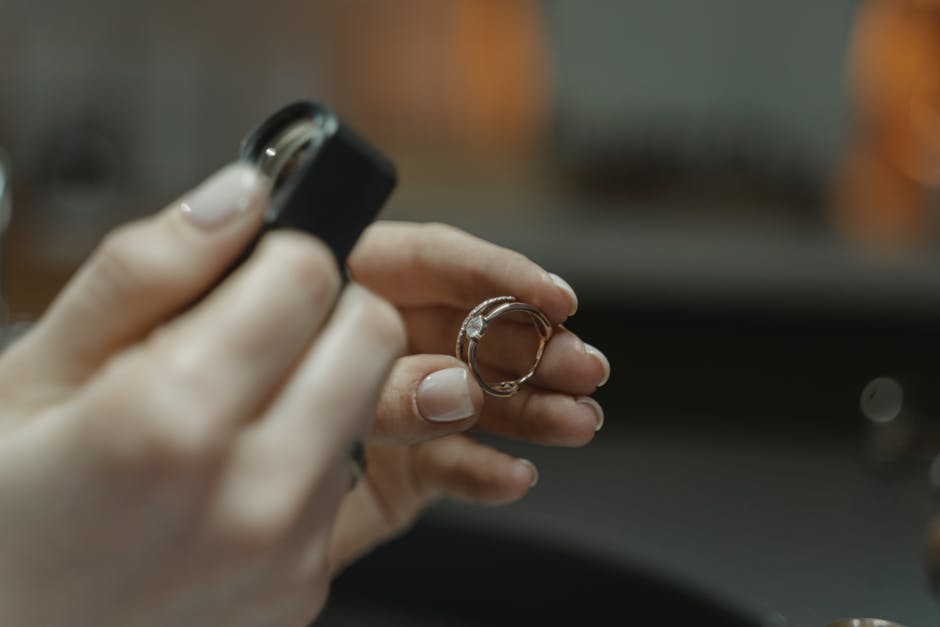
- Use a magnifying glass to inspect the inner band of rings, the clasps of necklaces, or the edges of coins.
- Look for numbers stamped into the metal.
The Result: In Pakistan and internationally, you will typically see stamps like:
- 999 or 999.9: Indicates 24K (Pure Gold).
- 916: Indicates 22K (Standard for Pakistani bridal jewelry).
- 875: Indicates 21K.
- 750: Indicates 18K.
If there is no stamp, it doesn't automatically mean it's fake (older jewelry or custom pieces sometimes lack them), but a missing hallmark on modern jewelry is a major red flag.
5. The Acid/Vinegar Test
If you don't have a professional nitric acid testing kit, you can use white vinegar to check for an immediate reaction.
How to do it:
- Place your gold item on a table or in a small bowl.
- Apply a few drops of white vinegar directly onto the metal.
- Wait about 15 minutes and observe.
The Result: Real gold is a stable noble metal and will not react to the vinegar; it will not change color or corrode. If the metal changes color (often turning black, green, or brown), it is fake.
Warning: The Limits of Home Testing
While these 5 simple tests are excellent initial filters, they are not foolproof.
Modern counterfeiters are sophisticated. A heavy tungsten bar coated in a thick layer of 24K gold will pass the magnet test, the float test, and even the ceramic scratch test. It will also pass the acid test on the surface level.
Home tests are best used to quickly identify obvious fakes, but they cannot give you the exact karat purity or detect deep plating over heavy metals.
Conclusion
Knowing how to test gold at home empowers you as a buyer and helps protect your hard-earned savings. However, when large amounts of money are on the line, nothing replaces professional equipment.
If you have performed these tests and are still unsure, take your gold to a trusted jeweler or a certified testing laboratory in a major Sarafa market (like Karachi or Lahore). They use advanced X-ray Fluorescence (XRF) machines and deep acid tests that can definitively verify your gold's authenticity and exact purity without damaging it.